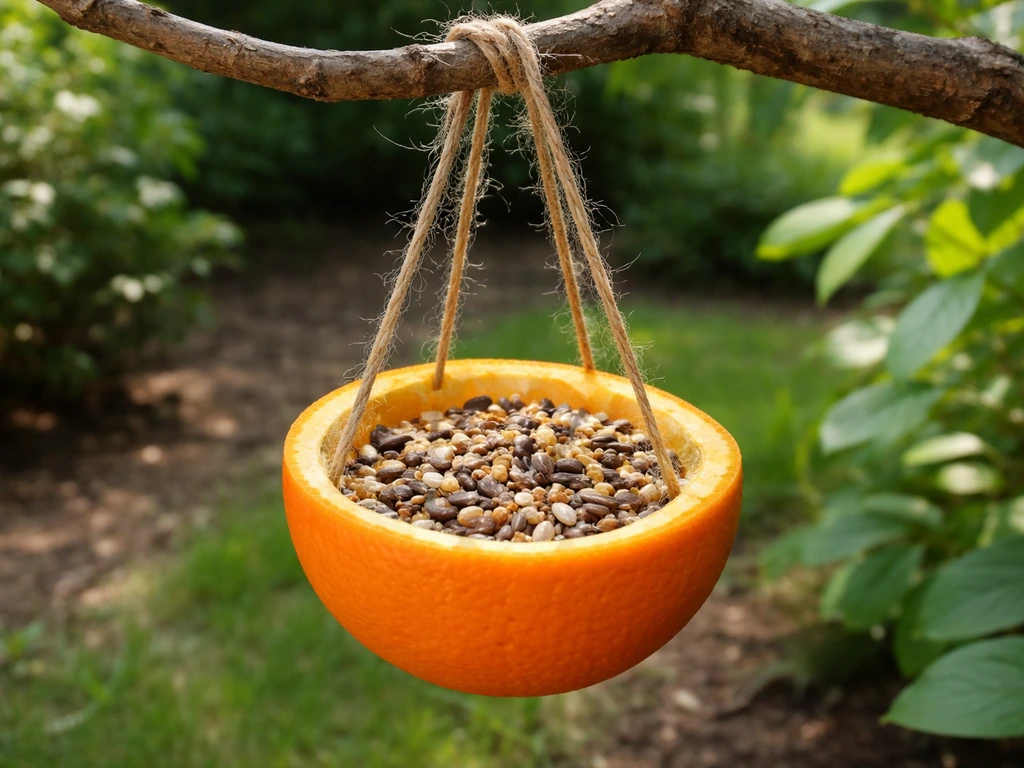
Cut an orange in half, scoop out the flesh, poke three or four holes around the rim, thread some wire or a thin wooden skewer through the holes to create a hanger, fill the cup with seeds or suet, and hang it from a branch. That's really the whole project. You can do it in under ten minutes with things you already have at home, and orioles, robins, catbirds, and tanagers will find it within a day or two if you put it in the right spot.
How to Make a Bird Feeder Out of an Orange
Marcus Brennan
12 Jun 2026
Materials and tools for an orange bird feeder
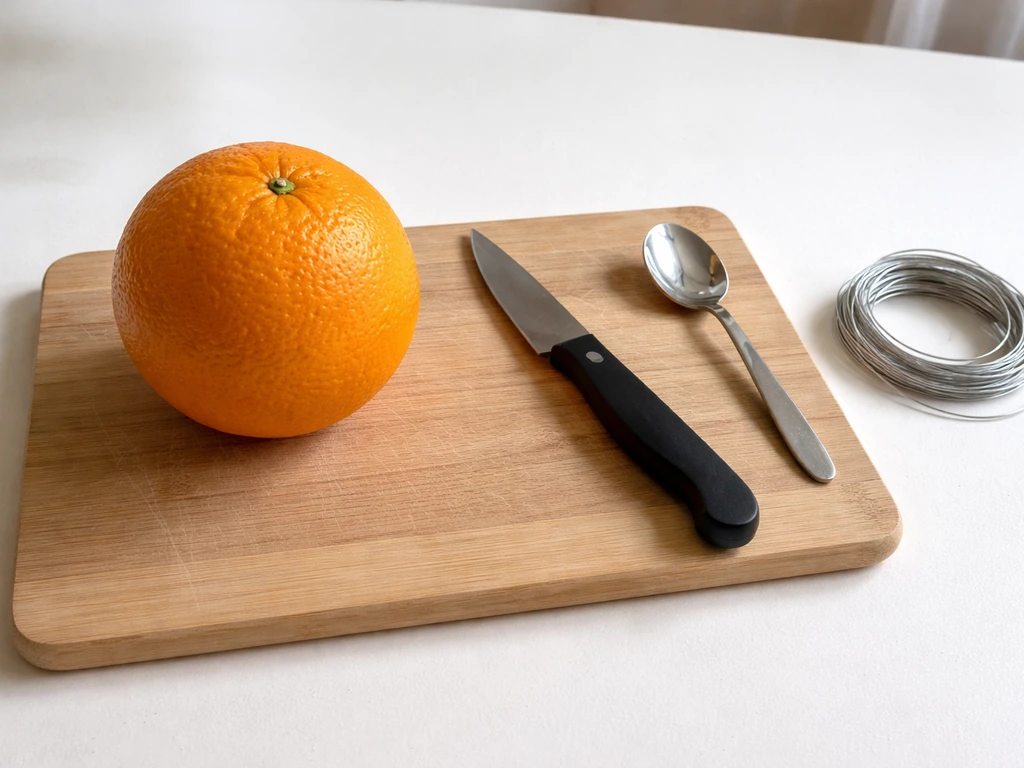
The beauty of this build is that almost nothing on the list costs money. Here's what you need:
- One large navel or Valencia orange (a bigger orange gives you a deeper cup and holds more food)
- A sharp paring knife or serrated knife for cutting
- A spoon for scooping out the flesh
- A skewer, straightened wire coat hanger, or thin gauge wire (16–18 gauge wire works well)
- A toothpick, nail, or small drill bit for poking the rim holes
- Optional: a permanent marker to mark your cut line before slicing
You do not need a drill, hot glue, or any hardware store supplies for the basic version. If you want to make the feeder last a few extra days, a short piece of thin-gauge galvanized or copper wire holds up better than twine in wet weather. One important note from the U.S. Fish & Wildlife Service: skip the string, yarn, or twine for the actual hanger. Birds can mistake fibrous materials for nesting material or food and accidentally ingest them. Thin wire is safer and more durable anyway.
Step-by-step: make an orange bird feeder
This whole build takes about 10 minutes. Work over a cutting board so the orange juice doesn't make a mess.
- Cut the orange in half crosswise (through the equator, not stem to tip). This gives you two round, bowl-shaped halves with natural ridged sides that help hold the filling in place.
- Scoop out the flesh with a spoon. Leave a thin layer of white pith attached to the rind — it adds structural support and keeps the cup from collapsing. The flesh you scooped out is perfectly good to eat, so snack on it while you work.
- Let the cup sit cut-side up for about five minutes to drain any pooled juice. A wet cup makes seeds clump and speeds up mold growth.
- Use a toothpick, nail, or small skewer to poke three evenly spaced holes about a quarter inch from the top rim of the orange half. Spacing them evenly — roughly 120 degrees apart — keeps the cup level when hanging.
- Cut three equal lengths of thin wire, each about 8 inches long. Thread one wire through each hole and bend the end inside the cup to act as a stop (like a button on a thread). Gather the three wires above the cup and twist them together at the top to form a single hanging loop.
- Alternatively, thread one long wire through two opposite holes and bend both ends up, twisting them together above the cup to form a simple U-shaped hanger. This is faster and works just as well.
- Fill the cup with your chosen food (see the next section for what works best), but do not overfill. Leave about a quarter inch of rim above the food so it does not spill when the feeder sways in the breeze.
- Hang immediately. The orange cup will start to dry and soften after 24–48 hours outdoors, so the sooner it goes up, the better.
Choosing the right food and filling method
The orange cup itself is part of the attraction, orioles in particular are drawn to the bright color and the citrus scent. But what you put inside it determines which birds visit and how long the feeder stays safe to use.
Foods that work well in an orange cup
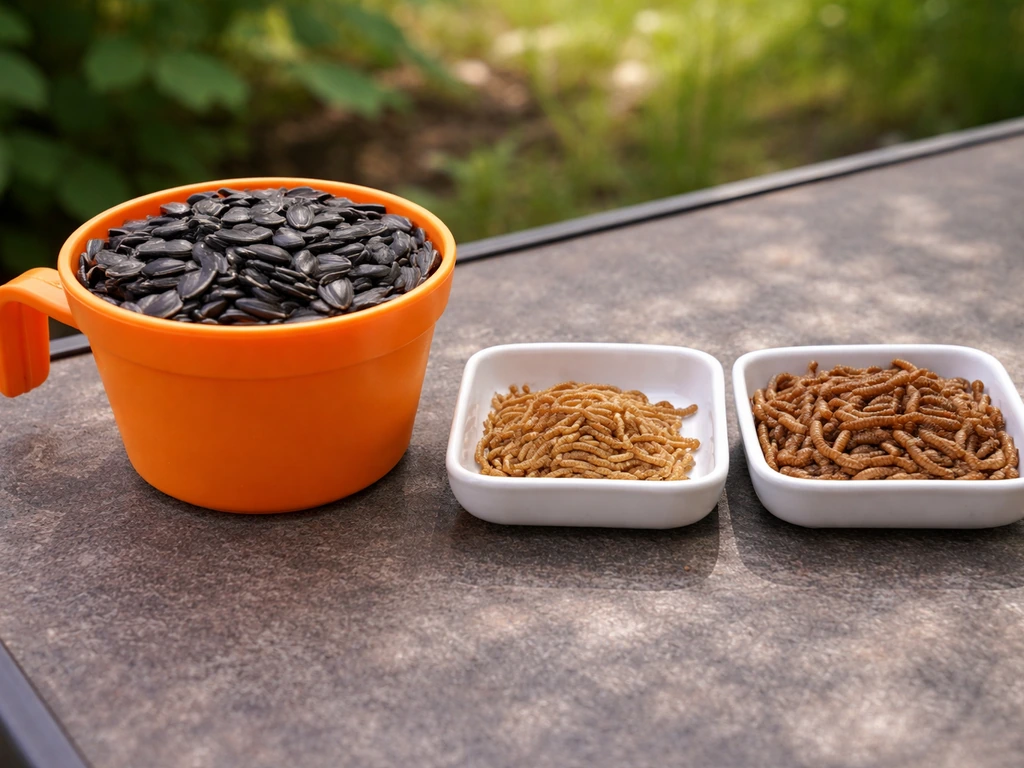
- Black-oil sunflower seeds: the single most versatile seed; attracts the widest variety of backyard birds
- Mealworms (live or dried): one of the best options for attracting bluebirds, robins, and catbirds; live mealworms are especially effective in spring and early summer
- Grape jelly: a classic oriole food that pairs perfectly with the orange cup; use a small spoonful at a time so it does not ferment in warm weather
- Suet crumbles or suet nuggets: dense, high-energy food that stays in place better than loose seeds and does not blow out in wind
- Shelled sunflower hearts or peanut hearts: easy for smaller birds to eat without husking; just be aware they go rancid faster than whole seeds
Foods to avoid
Do not put bread, crackers, or pastry in the orange cup. Dry bread can swell and cause digestive problems, and according to U.S. Fish & Wildlife Service guidance, moldy bread can introduce bacteria that cause respiratory illness in birds. If you want to offer something soft, grape jelly or mealworms are far safer choices. Also skip nyjer (thistle) seed for this feeder, it is so fine it will fall right through the cup and requires a specialized feeder with tiny ports to be practical.
How to fill the cup cleanly
For loose seeds, a small spoon or a folded piece of paper used as a funnel works well. For grape jelly or suet paste, press the food down gently against the pith so it sits snugly rather than mounding up and falling out. If you want seeds to stick better, you can spread a very thin layer of peanut butter on the inside of the pith first, then press seeds into it. This approach works the same way as a pinecone peanut butter feeder: the sticky surface holds the seeds in place even when the cup swings.
Hanging and placement tips for backyard safety
Where you hang the feeder matters more than most people realize. A bad location means frustrated birds, emboldened squirrels, and window collisions.
Distance from windows
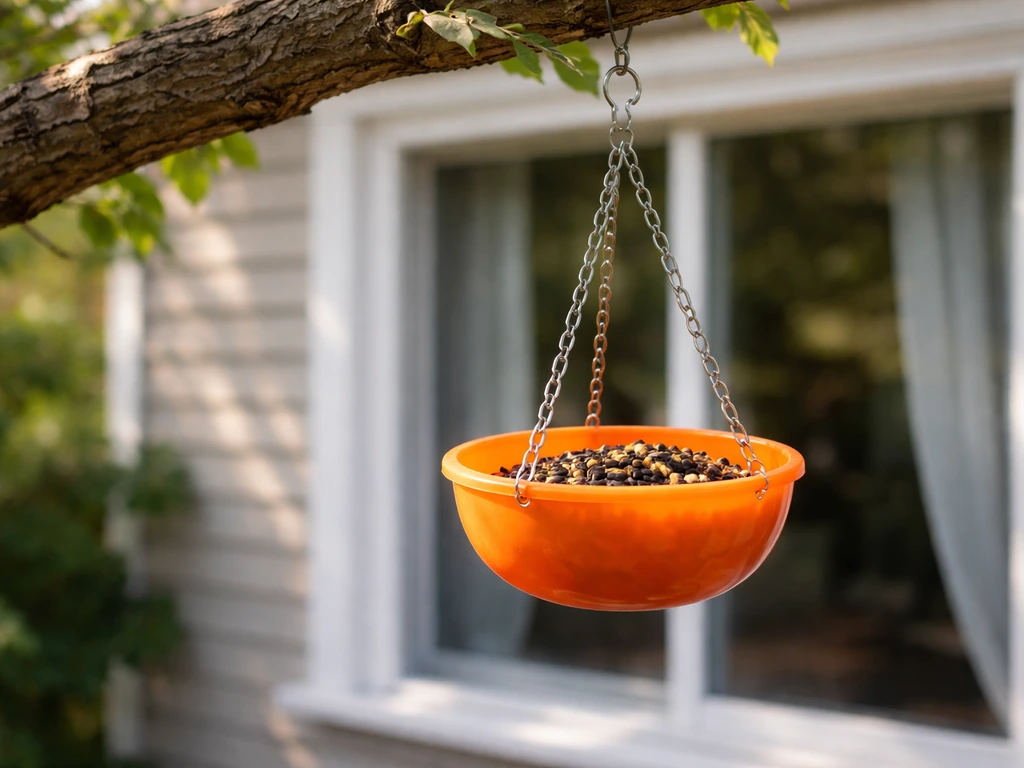
Place the feeder either closer than 3 feet from a window or farther than 30 feet away. This sounds counterintuitive, but it is backed by research from Cornell Lab and the U.S. Fish & Wildlife Service. Feeders within 3 feet do not give birds enough room to build up dangerous speed if they startle toward the glass. Feeders beyond 30 feet are far enough that birds have time to course-correct. The dangerous middle zone is roughly 3 to 30 feet out, that is where most fatal collisions happen.
Height and branch placement
Hang the orange cup about 5 to 6 feet off the ground on a tree branch or hook. This height is accessible to birds but makes it harder for cats to ambush them. Choose a branch with some open space around it so birds can see predators approaching and have a clear flight path away. A branch with nearby shrubs or small trees about 10 feet away gives birds a safe staging area where they can wait and watch before flying in to feed.
Dealing with squirrels
Squirrels will find the orange cup quickly, especially if it contains sunflower seeds. Since this is not a permanent feeder, the simplest defense is placement: hang it on a thin branch that cannot support a squirrel's weight, or on a dedicated feeder pole with a baffle. The cup's short lifespan also works in your favor here, rotating it every 2 to 3 days means squirrels have less time to figure out a reliable route to it.
Maintenance and cleaning between refills
An orange cup feeder is inherently temporary, which actually simplifies maintenance quite a bit. Still, a few habits will keep it safe for birds throughout its short life.
How long does an orange cup last?
In dry weather, an orange half can hold up for about 3 to 5 days before it starts to soften, shrivel, or show mold. In hot, humid weather, plan to replace it every 1 to 2 days. When the rind starts to feel soft or slimy, it is time to compost it and start fresh. The short lifespan is not a flaw, it is actually what makes this a low-effort, low-risk feeder. You are naturally forced to refresh it before conditions get unhealthy.
Cleaning the hanger wire between uses
If you are reusing the same wire hanger (which is fine), rinse it with hot water and let it dry before threading it through a fresh orange. If any food residue has stuck to the wire, a quick scrub with a small brush removes it. For a more thorough sanitizing, dip the wire in a solution of 1 part bleach to 9 parts water, the same dilution recommended by Cornell Lab's All About Birds and Virginia DWR for cleaning standard feeders, then rinse well and let it air dry completely before reuse.
If you use a supporting dish or platform
Some people set the orange cup inside a small shallow dish or on a platform feeder tray rather than hanging it. If you do this, wipe the dish down with the 1:9 bleach-to-water solution about once every two weeks, as Iowa DNR and Cornell Lab both recommend for regular feeder maintenance. Let it dry fully before setting a new cup on it. Wet residue left in the bottom of a tray is one of the fastest ways to grow mold that can make birds sick. The Morton Grove (IL) bird feeder handout also advises removing debris or remnants and cleaning all feeder areas, since moldy or spoiled food can be harmful to birds and should be avoided Wet residue left in the bottom of a tray is one of the fastest ways to grow mold that can make birds sick..
Troubleshooting issues (mold, pests, not attracting birds)
Mold is forming quickly
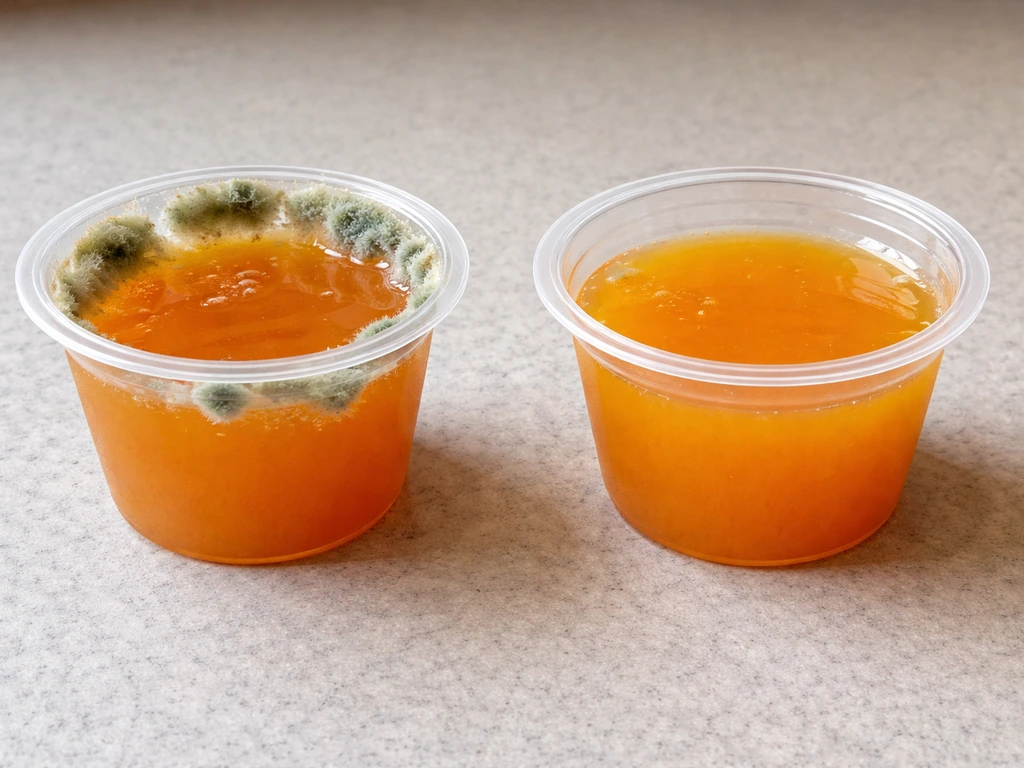
Fast mold growth almost always means one of two things: the weather is hot and humid, or the orange was not drained before filling. Next time, let the scooped cup drain cut-side down for 10 minutes before filling. In summer heat, switch to a 1 to 2 day replacement schedule instead of waiting for visible mold to appear. Moldy or spoiled food is genuinely harmful to birds, so when in doubt, throw it out and start fresh, the orange costs almost nothing.
Squirrels and larger pests are emptying it immediately
If squirrels are draining the cup within hours, move it to a thinner, more flexible branch that bounces under their weight, or switch to a pole-mounted setup with a squirrel baffle. You can also try hanging the cup lower in a dense shrub, songbirds are comfortable navigating tight spaces, but squirrels are less enthusiastic about it. For raccoons raiding at night, bring the feeder in after dark and put it back out in the morning.
Birds are not visiting
Give it at least 3 to 5 days. New feeders take time for birds to discover. If you have not had feeders in your yard before, it can take up to two weeks for birds to start regularly visiting. A few things that speed it up: place the feeder near existing cover like shrubs or trees, use bright orange rind (the color itself attracts orioles), and add some grape jelly to the cup, the scent travels and pulls birds in faster than dry seed alone. If you want another simple DIY option, you can also make a bird feeder from a 2L bottle using similar cut-and-hang techniques 2L bottle bird feeder. Make sure the feeder is visible from the air and not buried deep in a dense canopy.
The cup keeps tipping or losing its shape
If the wires are uneven, the cup will tilt and food will spill. Re-thread the wires so all three are the same length before twisting them together. If the rind has softened too much to hold the holes firmly, the cup has reached the end of its life, replace it rather than trying to reinforce it. For a slightly more rigid cup, choose a thicker-skinned orange variety like a navel orange rather than a thin-skinned juice orange.
Ants are getting into the food
Ants are drawn to sweet foods like grape jelly almost immediately. A simple fix is to apply a thin ring of petroleum jelly around the wire or branch above the feeder, ants cannot cross it. Avoid using any chemical ant killers near a bird feeder. If ants are a persistent problem, switch to seeds or mealworms instead of jelly, or hang the feeder from a pole with an ant moat (a small water-filled cup the wire passes through) installed above the feeder.
If you enjoy this kind of low-cost, natural-material feeder build, the same basic approach works with other fruits and containers. You can use the same quick, DIY hanging setup when you learn how to make an oriole bird feeder with other feeders too. You can also use a similar DIY approach to make bird feeders out of mason jars by creating a simple hanger and adding the right seed or suet mason jar bird feeder. A gourd bird feeder is a similar project, but you’ll hollow and drill the gourd first before adding the hanger and filling it with seeds or suet. You can even swap in a pumpkin and repeat the same steps to make a pumpkin bird feeder for similar results other fruits and containers. A halved pumpkin makes a great autumn feeder on the same principle, and if you want something with more longevity, a tin can or mason jar feeder will outlast an orange by months. But for a quick, no-waste feeder you can put together right now with what is in your fruit bowl, the orange cup is hard to beat. You can use the same simple bottle-and-hanger idea for a different project, like learning how to make a bird feeder from a coke bottle orange bird feeder. You can also make a simple bird feeder out of wine corks by turning the corks into a small holder and adding seeds, then hanging it in a safe spot.
FAQ
Can I make and use an orange bird feeder in cold or snowy weather?
Yes, but change the schedule and placement. In winter, the orange rind can stay intact longer, but food can freeze and birds cannot remove seed easily from a cup that is solid or icy. Check it daily when temperatures drop below freezing, keep it sheltered from driving rain, and remove any solidified or damp food so it does not thaw, mold, and refreeze.
How long can I reuse the orange cup instead of replacing it?
Use only fresh orange halves, do not keep reusing the rind. Even if the rind looks fine, once it starts softening or getting slimy it can harbor mold spores and bacteria. Rinse and dry the hanger, then start a new orange cup rather than trying to “patch” holes with extra twine or wire.
What should I do if birds check the feeder but do not stay to eat?
If you see birds landing and then leaving, there is often a mismatch between food type and cup behavior. Dry seeds often fall through unless pressed in lightly or mixed with a thin peanut-butter layer, while jelly and suet paste must be pressed into the pith so it sits below the rim. Also confirm the feeder is not in the risky 3 to 30 feet window from windows.
How much seed or jelly should I put in each orange cup?
Roughly, aim for 1 to 2 tablespoons of food per orange cup depending on how wide the rind is. Overfilling makes it mound, then spill as the cup swings, and it shortens the safe time because more residue soaks and grows faster. For jelly or suet paste, fill just until it is snug and level.
What is the best way to prevent the orange cup from tilting or leaking?
Twist or tighten the wire so the three points around the rim are even, then hang it so the cut face is upright and slightly protected from direct rain. If the cup tilts or the holes tear, food will leak onto the branch and attract ants, mold, and unwanted pests.
Is it okay to use string or yarn to hang the orange feeder if I do it carefully?
It is usually safe if you limit the hanger contact with the bird’s potential nesting area. Still, the main rule is the same as for the feeder, avoid fibrous materials for the hanger, and do not let loose string or yarn hang down where birds might pull it. A wire hanger kept taut and short above the cup helps reduce tangling.
Can I put the orange feeder in a dish or tray instead of hanging it?
Yes, but with a caveat. If you place the orange cup inside a shallow dish, you must clean the dish about once every two weeks with the 1:9 bleach-to-water soak and fully dry it before adding the next cup. Standing wet residue in the bottom becomes moldy quickly, so this setup is higher maintenance than simply hanging.
What should I do if ants start swarming the feeder?
If ants are showing up, a better first step is to stop the jelly before it becomes the attractant. Petroleum jelly on the wire or branch above the feeder creates a barrier ants cannot cross, but do not apply anything directly to the orange cup food area. If ants persist, switch the orange filling to seeds or mealworms, and consider an ant moat on a pole setup.
Why aren’t the birds visiting yet, and how long should I wait?
Not consistently. The bright rind and quick refresh schedule work, but the feeder is temporary, and many species are wary at first. Give it at least 3 to 5 days, keep it visible from the air, and add a small amount of grape jelly if you are not already getting ant problems. If you already have plenty of feeders, some birds may take longer to switch to this one.
How can I stop squirrels from emptying the orange feeder too fast?
Choose a branch that bends slightly under a squirrel’s weight, this reduces the squirrel’s ability to keep a stable grip on the cup. If squirrels are especially determined, switch to a pole-mounted feeder with a baffle, because squirrels can learn branch routes quickly. Also consider moving the feeder lower in dense shrubs where songbirds can navigate but squirrels have more trouble reaching accurately.
I put out the feeder, but I see no birds at all. What are the most common reasons?
Most likely, the feeder is either too close to a window, too far so birds cannot find it quickly, or the food is not set so birds can access it. Re-check the window distance rule (closer than 3 feet or farther than 30 feet), then adjust food technique, for example press suet paste or jelly snugly into the pith and use a thin peanut-butter layer when you want seeds to stick.