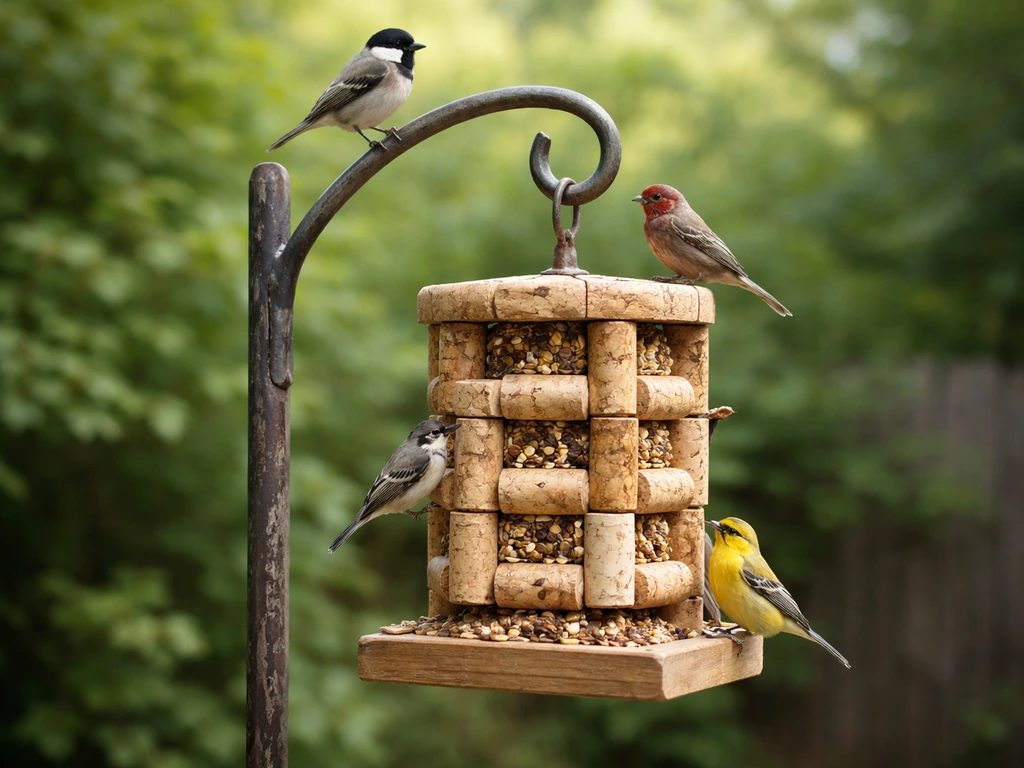
You can build a working wine-cork bird feeder in about an hour using corks, a sturdy base (a wood plank or wire frame works great), hot-melt glue, and some twine or wire for hanging. If you want a different DIY option, learn how to make a bird feeder from a coke bottle for a quick, recycled alternative wine-cork bird feeder. The basic idea is simple: arrange corks in a grid or cluster pattern on a flat base, hollow out or space them so seeds sit in the gaps, and hang the whole thing somewhere sheltered in your yard. It's a lightweight craft project that genuinely attracts small backyard birds, especially chickadees, nuthatches, and finches, and it costs almost nothing if you've been saving corks.
How to Make a Bird Feeder Out of Wine Corks
Marcus Brennan
4 Jun 2026
What supplies you need for a wine-cork bird feeder
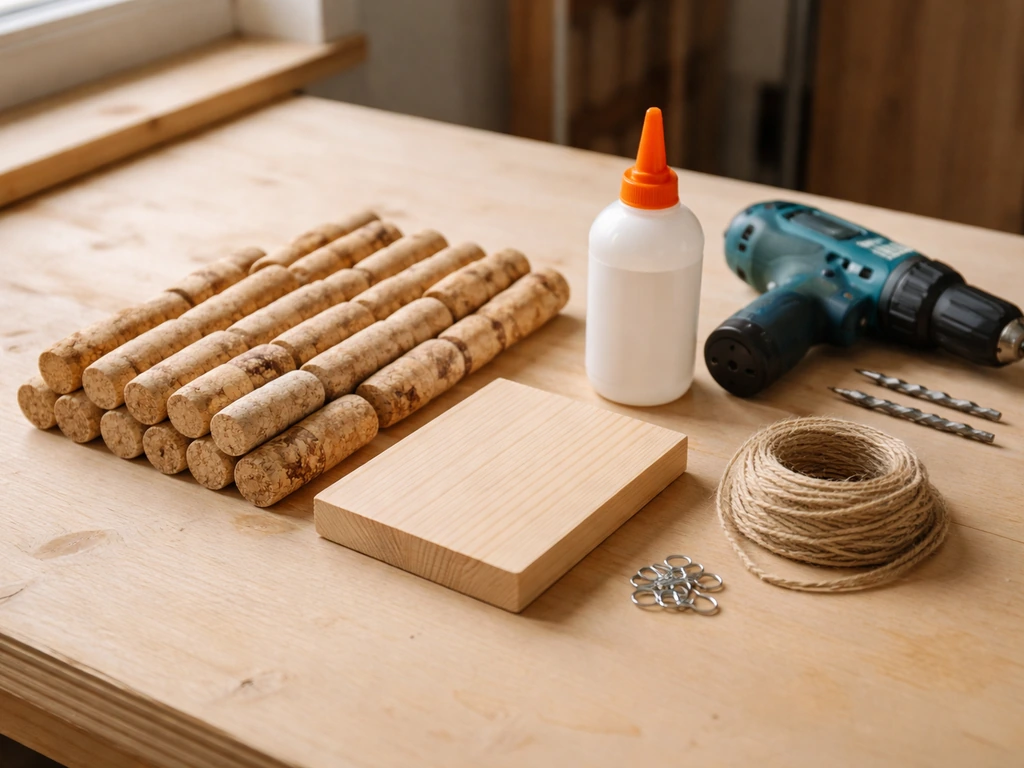
Gather everything before you start so you're not hunting for things mid-project. Here's the full list, split into essentials and optional upgrades.
The essentials
- 30 to 50 natural wine corks (synthetic corks work but don't hold glue as well)
- A flat wood base, roughly 8 by 10 inches, like a piece of 1/2-inch plywood or a cedar shake shingle
- A hot-glue gun with extra glue sticks (this is the backbone of the build, so don't skimp)
- Drill and a 3/8-inch or 1/2-inch drill bit
- Heavy-duty twine, jute rope, or 14-gauge wire for hanging
- Scissors or a utility knife
- Eye hooks or screw eyes (two, for attaching the hanging wire to the base)
Optional but helpful add-ons
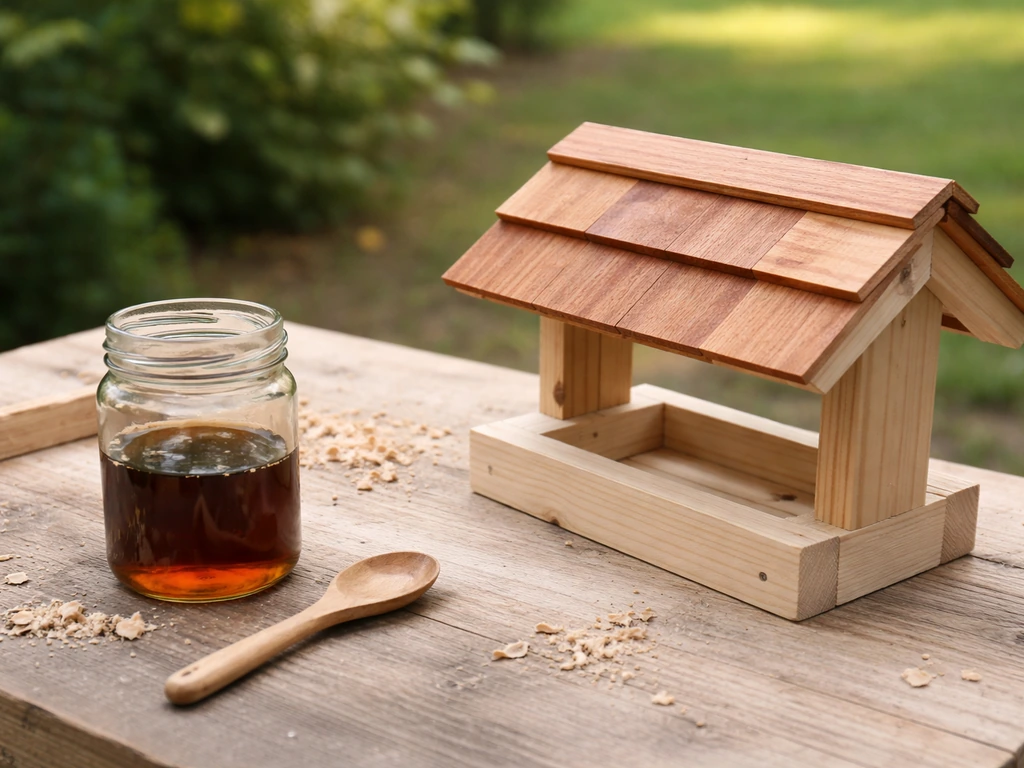
- 100% pure tung oil to seal the wood base (it's waterproof, all-natural, and food-safe, so it won't harm birds)
- A small roof piece cut from cedar or a thin wood scrap to deflect rain
- Mesh or hardware cloth if you want to use a wire frame instead of a wood base
- A wooden dowel (1/4-inch diameter) to add a small perch below the feeding area
- Waterproof wood glue as a secondary adhesive for the base layer of corks
One important note on adhesives: use standard hot-melt glue or wood glue only. Avoid any glue labeled with strong solvents or chemical hardeners. If you're planning a hummingbird-style cork feeder (like the ones on Instructables), birds that directly contact nectar near glue joints are especially sensitive to chemical residues, so all-natural or low-VOC options are the safest call here too.
Step-by-step: building the wine-cork bird feeder
This build takes about 45 to 75 minutes, depending on how fancy you get. The design below creates a flat-panel feeder where corks are arranged in rows and seeds rest in the natural gaps between them. It's sturdy, weather-tolerant, and birds can perch right on the corks.
- Seal your wood base first. If you're using tung oil, apply one thin coat to both sides of the plank and let it cure for at least 24 hours before adding corks. If you're skipping this step, that's fine for a first build, but the base will weather faster.
- Drill two small holes near the top corners of the wood base (or top edge if it's a vertical design). These will hold your eye hooks for hanging. Screw the eye hooks in by hand.
- Lay out your cork arrangement dry before gluing. Place corks flat-side down in tight rows across the wood base. Leave small gaps between them so seeds can nestle in and birds can peck them out. You're aiming for a surface that holds seed without it just sliding off.
- Once you're happy with the layout, start gluing from the back row forward. Apply hot glue directly to the bottom of each cork and press it firmly onto the wood. Hold each one for about 10 seconds. Work fast because hot glue sets quickly.
- For a second layer, glue additional corks on top of the first row at slight angles to create small seed pockets. Think honeycomb-style nooks rather than a completely flat surface. This is what actually holds the food in place when wind picks up.
- Optionally drill small holes through a few corks using your 3/8-inch bit. These holes can hold suet plugs or be packed with peanut butter-based fillings for a more targeted feeding spot.
- If adding a perch, drill a hole just below the main cork surface and insert the wooden dowel, securing it with a dab of hot glue.
- Thread your twine or wire through both eye hooks and tie it off securely. Give it a strong tug to test before you hang it outdoors.
Don't stress if your first cork layer isn't perfectly even. Birds don't care about symmetry, and small gaps actually help seed stay put. If a cork pops off after the glue cures (it happens, especially with synthetic corks), just re-glue it. Iterating is part of the process.
How to hang or mount it safely for birds
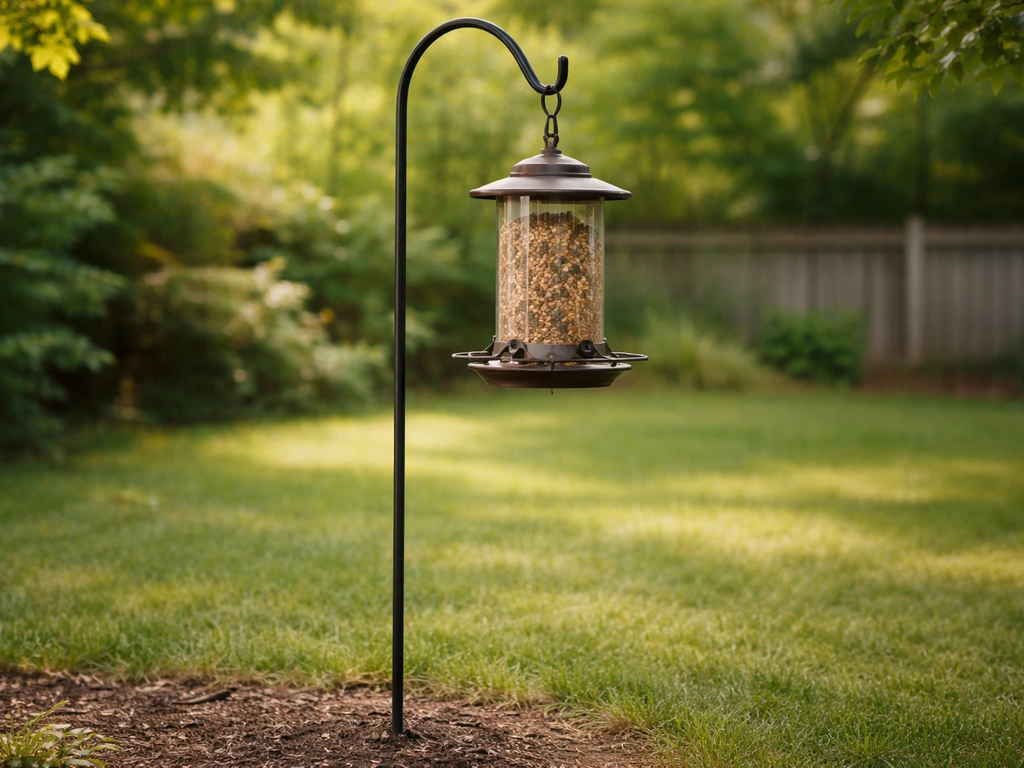
Height and placement matter more than most people realize. Hang the feeder at least 4 feet off the ground so cats can't reach it, and no higher than about 6 to 8 feet so you can easily refill and clean it. For squirrel resistance (more on that later), placement relative to trees and structures is the key variable.
The best location is on a freestanding shepherd's hook or pole at least 8 to 10 feet from any tree, fence, or building. Squirrels can jump surprisingly far horizontally, so distance is your main defense. Perky Pet's guidance puts the minimum at 12 feet from a tree trunk or limb when squirrel-proofing is the goal. That's not always possible in a small yard, but get as close to it as you can.
For the cork feeder specifically, since it's lightweight, wind is a real concern. Here's how to hang it stably:
- Use two hang points (both eye hooks) and a spreader-style hanger to keep the feeder from spinning and tipping
- Hang it in a spot with partial shelter, like under an eave or near (but not directly under) a tree canopy, to reduce rain and wind exposure
- Avoid fully exposed spots where the feeder will swing violently in storms and dump all the seed
- Face the feeding surface away from prevailing wind if your local conditions are consistently windy
Birds also feel safer when feeders are within about 10 feet of cover like shrubs or trees, which gives them a quick escape if a hawk shows up. So the sweet spot is: close enough to cover for bird confidence, far enough from it for squirrel resistance.
Best foods and how to fill cork compartments
The cork design works best with smaller seeds and semi-solid foods that can sit in pockets or be pressed into drilled holes. Large seeds or loose mixes tend to just fall out. Here are the top choices:
| Food type | Why it works for cork feeders | Birds it attracts |
|---|---|---|
| Black-oil sunflower seeds | Small, lightweight seeds that sit in cork gaps well. Thin shells make them easy for small birds to crack. | Chickadees, nuthatches, woodpeckers, finches, sparrows |
| Hulled sunflower (chips) | No shells to clean up, stay in crevices better than whole seeds, attractive to many species | Most seed-eating backyard birds |
| Safflower seeds | Small and dense enough to wedge into cork gaps. Disliked by starlings, house sparrows, and squirrels, so it's a great pest-reducer. | Cardinals, chickadees, nuthatches |
| Suet plugs or suet cake chunks | Press into drilled cork holes snugly. High fat content is especially valuable in cold months. | Woodpeckers, nuthatches, chickadees, wrens |
| Peanut butter mix (peanut butter + cornmeal) | Pack into drilled holes or gaps. Very sticky, so it stays put. Use no-salt, no-additive peanut butter only. | Woodpeckers, blue jays, nuthatches, chickadees |
Nyjer (thistle) seed is not a great fit for this feeder design. It requires very small feeding ports to prevent waste, and a cork-gap design won't contain it well. If finches are your priority, a dedicated nyjer sock or tube feeder will serve you better alongside this cork build.
When filling, press seed gently into the cork gaps and pockets rather than just scattering it on top. This makes the food last longer between refills and keeps it from blowing away immediately. For drilled-hole compartments, pack suet or peanut butter mix firmly with a butter knife or your fingers.
Weatherproofing, cleaning, and maintenance
Weatherproofing the feeder before it goes outside
Corks themselves are naturally water-resistant (that's why they're used in wine bottles), but the wood base and hot glue joints are the weak points. Seal the wood base with tung oil or exterior-grade linseed oil before assembling. Both are all-natural and safe for wildlife. Avoid polyurethane or latex-based paints, which can off-gas and crack with repeated wet-dry cycles. Adding a small roof overhang, even a thin cedar shingle glued to the top edge, makes a real difference in keeping the seed dry.
How often to clean it
Clean this feeder at least once a week during warm weather. All About Birds (Cornell Lab) also advises cleaning seed feeders regularly and says to avoid soap or detergent, using hot water and scrubbing instead. Damp, warm conditions let mold and bacteria build up quickly, which can make birds sick. In winter, every two weeks is usually fine. Don't let wet seed sit in the feeder for more than a couple of days without checking it.
The cleaning routine
- Knock out all old seed and debris. A stiff-bristle brush helps get into the cork gaps.
- For routine cleaning, scrub with hot water and a brush. Cornell Lab's All About Birds team advises against soap and detergent since residue is hard to rinse fully from porous cork surfaces.
- For a deeper clean or if you spot mold, mix a 10% bleach solution (1 part bleach to 9 parts water, per Audubon and USDA-linked guidance) and scrub all surfaces. Let it sit for a few minutes.
- Rinse extremely thoroughly with clean water. Bleach residue is harmful to birds, so rinse until you can't smell any bleach.
- Let it air dry completely before refilling. Don't rush this step, damp feeders just get moldy again faster.
- Alternatively, Clemson HGIC recommends a 4-to-1 vinegar-and-water solution for routine cleaning when no mold is visible. This is gentler on the corks and still effective.
Over time, some corks may soften or discolor from weather exposure. That's normal and doesn't affect function. If a cork gets soggy and starts to crumble, pop it off and hot-glue a replacement. Keep a few spare corks in a drawer for exactly this.
Pest-proofing and troubleshooting common problems
Squirrels
Squirrels are the most common and persistent problem for any backyard feeder. With a lightweight cork feeder, they can easily grab it, tip it, or just sit on it and eat everything. Here's the honest reality: no setup is completely squirrel-proof. But you can get close. Mount the feeder on a smooth metal pole (not a tree or wooden post they can easily grip) and add a cone-shaped or torpedo-style baffle below the feeder. Keep the pole at least 8 to 10 feet away from anything a squirrel can leap from, including your house, fences, and tree branches. Filling with safflower seed also helps, since squirrels dislike the bitter taste.
Larger nuisance birds (starlings, house sparrows)
European starlings and house sparrows can quickly dominate a feeder and push out the smaller birds you actually want to see. Safflower seed is a good deterrent since both species tend to avoid it. Because the cork feeder has no cage or bottom-access design, it won't naturally exclude them the way some upside-down suet feeders do. If this becomes a problem, try switching entirely to safflower and see if the mix of visitors improves.
Mold and wet seed
If you keep finding moldy seed clumped in the cork gaps, your feeder is getting too much rain exposure. Move it somewhere with more shelter overhead, or build a simple roof piece from a cedar scrap and screw it to the top of the base. Only fill the feeder with as much seed as birds will eat in two to three days, so you're not leaving stale food sitting in wet conditions.
Seed keeps falling out
If seed is spilling constantly, your cork gaps are probably too wide or the feeder is swinging too much in wind. Try pressing suet or peanut butter mix into the gaps to create a stickier base that holds smaller seeds. You can also hot-glue corks at slightly offset angles so the pockets are deeper and more enclosed. A more sheltered hang spot will also help reduce the swinging.
Feeder is unstable or wobbles
If the whole feeder tips or wobbles badly, the hang points may be too close together or the twine too long. Shorten the hang lines and make sure both eye hooks are load-bearing evenly. You can also add a small weight, like a flat stone glued to the back of the base, to stabilize it in wind.
Which bird species you're likely to attract
The cork feeder's small size and seed-friendly design works best for lighter, nimble birds. Here's a realistic look at who will likely show up based on the food you fill it with:
- Black-capped and Carolina chickadees: These will almost certainly be your most frequent visitors. They're bold, curious, and love sunflower seeds. Expect them within a day or two of hanging the feeder.
- White-breasted and red-breasted nuthatches: Nuthatches are brilliant at clinging to irregular surfaces, so a cork-covered feeder is practically designed for them. They'll work sunflower and suet.
- Downy and hairy woodpeckers: If you add drilled-hole suet or peanut butter spots, woodpeckers will find them. They're heavier birds but the wood base handles them fine.
- House finches and goldfinches: They'll visit for sunflower chips and hulled seed, especially if you're in a suburban area. Nyjer feeders will attract finches more reliably, but they'll use this one too.
- Dark-eyed juncos: Ground feeders that will pick up spilled seed below the feeder as much as eating directly from it.
- Tufted titmice: Regular visitors when sunflower seed is available. They tend to grab one seed at a time and fly off, which is fun to watch.
- Cardinals: Northern cardinals prefer a stable platform and safflower seed. They may visit but aren't as agile as chickadees on a cork surface.
Don't expect hummingbirds at this style of feeder. They need a dedicated nectar feeder with ports. Similarly, if you're trying to attract orioles specifically, a different feeder design with fruit or nectar is the better route. But for a broad mix of small and medium woodland birds, this cork feeder will genuinely pull them in, especially once birds in your yard learn to recognize it as a food source, which usually takes about a week to two weeks.
If you enjoy this kind of upcycled project, the same creative energy works well with other everyday containers too. If you want another simple DIY option, you can also learn how to make a bird feeder from a 2L bottle using common household supplies. If you want a different look, you can use the same upcycling ideas to make a bird feeder out of an orange as well upcycled project.
Feeders built from mason jars, tin cans, gourds, and even pumpkins follow similar principles: find a form that holds seed, add a hang point, give birds somewhere to land, and keep it clean. Feeders made from gourds follow similar principles: choose a gourd that can hold seed, add a hang point, provide landing space, and keep it clean.
Feeders made from pumpkins use the same basic steps, so if you want variety, you can apply these ideas and learn how to make a pumpkin bird feeder. If you want a different DIY option, you can also make a bird feeder from a tin can by punching holes for drainage and perches and filling it with suitable seed mason jars, tin cans, gourds, and even pumpkins.
The cork version has a charm of its own though, and once it's covered in chickadees on a winter morning, you'll be glad you saved all those corks.
FAQ
Can I use any wine corks, including synthetic ones?
No. Cork scraps work fine, but use only food-safe, non-chemical treated corks. If you collected corks from bottles that were stored with strong cleaners or chemicals, rinse and let them fully dry before gluing. Also check for synthetic corks, they often release a bit more residue at the glue joint and may need more re-gluing.
How do I make a cork feeder hold up in heavy rain and still keep birds safe?
If you seal the wood base with tung oil or exterior-grade linseed oil, you can keep cleaning to a weekly rhythm. In rainy climates, consider adding the roof overhang described in the build, and check for soggy seed after storms. For best protection, avoid leaving the feeder full when heavy rain is forecast.
Do birds get affected by glue fumes or residue on the corks?
Use hot-melt or wood glue, and only on parts birds cannot reach with beaks while they feed. To reduce residue exposure, let glue cure fully before hanging (until it feels firm and there is no lingering odor). If you spot glue strings at cork edges, carefully trim them once cooled, then rinse and dry any cork pieces that contacted glue.
Will this feeder work with any bird seed I already have?
Yes, but you need a seed type that can stay in place. For cork-gap feeders, good options are small seeds that can be pressed into gaps, or semi-solid mixes packed firmly into drilled holes. Avoid loose, large seeds because they fall out and waste food, especially when the feeder sways.
What changes should I make to the feeder in winter?
Cold weather is fine, but you should adapt your fill amounts. In winter, check every couple of days instead of waiting for the weekly schedule if you get freeze-thaw cycles, because damp seed can clump and block pockets. Also keep the feeder off the ground and give it shelter from wind-driven snow to prevent moisture from getting trapped.
How high should I hang it if I’m on a balcony or small yard and can’t reach easily?
If you can’t reach the recommended 4 to 6 feet height range for refilling, install it closer to 6 to 8 feet and use a longer hook or pole for servicing. Avoid lower placement for cat safety, and keep the hanging lines taut enough that the panel does not swing. Wind movement directly increases spillage and seed waste.
Can I attach the cork panel to a plastic or metal store-bought feeder frame?
You can, as long as you use it as a mechanical support, not as a way to glue a cork directly into place. Secure the base with wire or screws to the hook/pole bracket, then attach corks to the base. That way, if a cork pops off, the whole feeder does not separate from the hanger.
Should I drill holes for drainage or for compartments?
Yes, but do it in a way that preserves drainage. If you add drilled compartments, make sure there is a route for water to escape (for example, small through-drill holes or at least gaps that do not trap puddles). Completely sealed cork pockets can create wet, mold-prone zones.
What should I do if the seed keeps molding in the cork gaps?
Start by limiting the seed to what birds eat in about two to three days, then observe. If you still find mold, reduce rain exposure by moving the feeder under more shelter or adding the small roof overhang. Also shorten cleaning intervals in warm, humid weather, and discard any seed that looks wet, clumped, or has a strong musty smell.
What is the best way to reduce squirrel damage on a cork feeder?
Put the feeder farther from jumping and climbing routes. A good baseline is a smooth metal pole and distance from trees, fences, and house overhangs, because squirrels can launch horizontally farther than people expect. If squirrels persist, switch seed to safflower and consider adding a baffle that blocks access from below.